


At Texas Southmost College, the Agriculture and Agribusiness programs are helping students build the skills and knowledge that sustain one of the Rio Grande Valley’s most vital industries.
Designed to blend science, innovation, and real-world application, the programs prepare students for successful careers while strengthening the region’s agricultural future.
“Our Agriculture and Agribusiness programs at TSC give students a hands-on, science-based foundation in everything from animal science and horticulture to agronomy and agricultural economics,” said Franco C. Guerra, Program Coordinator and Instructor. “We built these programs to connect classroom learning with real-world experience, whether that’s participating in livestock and crop projects or learning modern agribusiness practices that prepare them for transfer or the workforce.”
The programs are structured to offer both immediate career readiness and seamless university transfer opportunities. Through 2+2 partnerships with Texas A&M University–Kingsville and Texas A&M University–McAllen, TSC students can begin locally, complete their associate degree, and transfer directly into bachelor’s programs in agricultural science or agricultural economics, saving money while staying close to home.
For Guerra, agriculture holds a special significance in that it is an academic subject rooted in a cornerstone of life in South Texas. He emphasizes that the field’s impact extends far beyond farms and crops.
“Agriculture is the backbone of everything,” he said. “It touches food security, environmental sustainability, and the economy all at once. It’s one of the few fields that directly affects every community, whether through local food systems, job creation, or conservation.”
In the Rio Grande Valley, agriculture represents both tradition and innovation. With growing opportunities in sustainable production, agribusiness management, and environmental conservation, graduates of the program are prepared to contribute to the area’s economic growth while also safeguarding its natural resources.
Students in TSC’s Agriculture and Agribusiness programs develop a comprehensive mix of technical and professional skills. Coursework covers areas such as animal and plant systems, soil science, marketing, and environmental stewardship. There is also equal focus devoted to soft skills such as leadership, communication, and teamwork, which are all essential qualities whose strength lies in their ubiquity.
“We want our graduates to be ready for both the field and the boardroom,” Guerra explained. “They leave here with the confidence and knowledge to take on leadership roles in any part of the agricultural sector.”
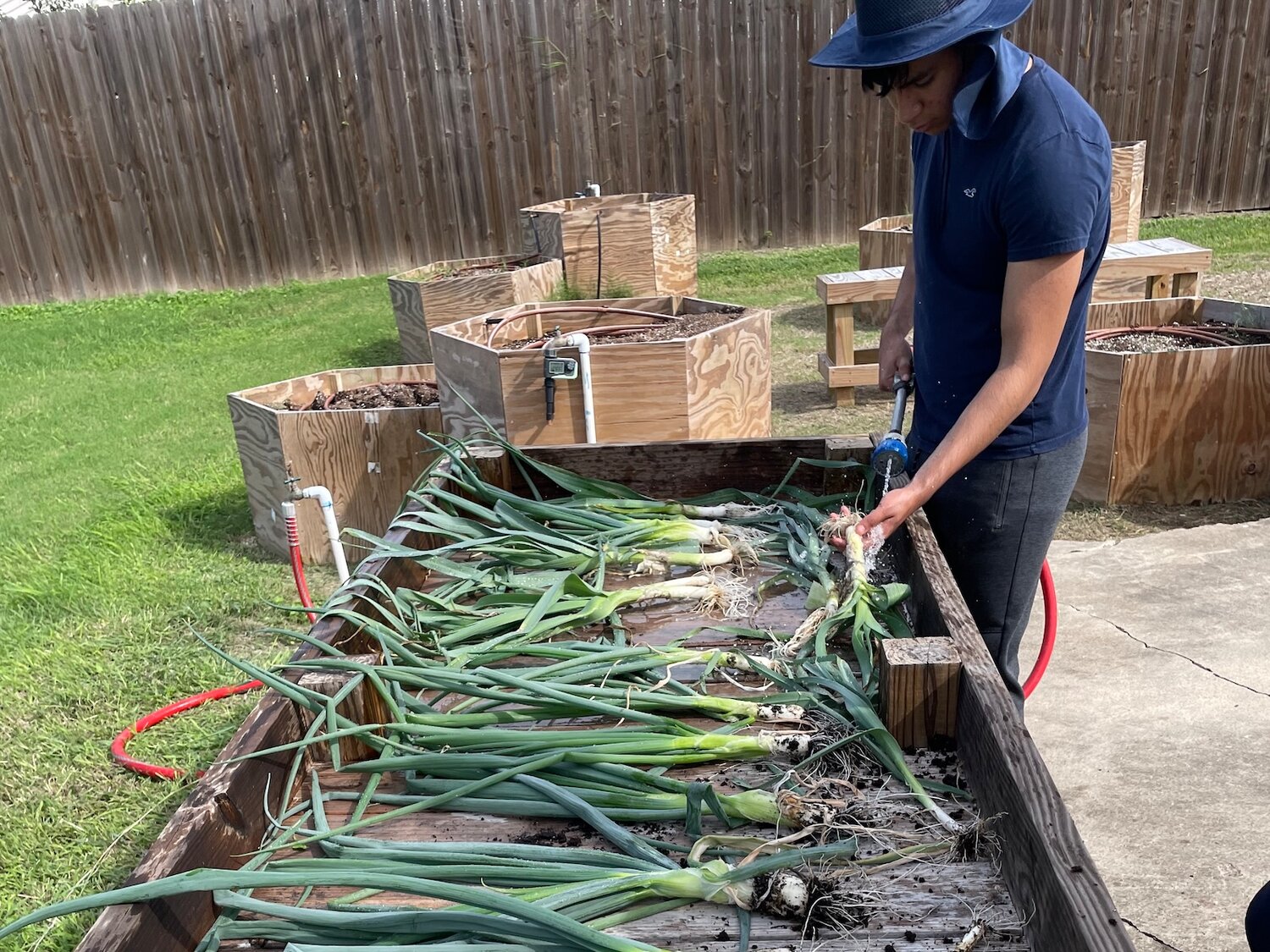
A key component of that experiential learning takes place in the TSC Community Garden, which serves as a living laboratory for Agronomy and Horticulture courses. “Students use the space to apply what they’ve learned in class by planting seeds, managing growth, and observing every stage of plant development,” Guerra explained. “It’s where they get to see their classroom lessons come to life.”
Once the crops are ready, all harvested produce is donated directly to the TSC Food Pantry, creating a tangible connection between students’ academic work and their community. Even at the garden’s modest scale, students learn the logistics of bringing food from farm-to-table, such as initial planning, crop selection, scheduling, irrigation, pest control, harvesting, and safe handling. “It’s a hands-on way to understand the effort behind the food system many people don’t see,” Guerra added.
By combining academic knowledge with practical hands-on experience, Texas Southmost College is cultivating a new generation of agricultural professionals equipped to address modern challenges and drive sustainable progress both locally and beyond.
Editor's Note: The above guest column was penned by James Walker, a communications specialist for Texas Southmost College. The column appears in the Rio Grande Guardian with the permission of the author. Walker can be reached by email via: james.walker@tsc.edu


