


BROWNSVILLE, Texas - The Flor de Mayo International Bridge project championed for many years by Cameron County has received a big boost thanks to the passage of legislation authored by U.S. Sen. Ted Cruz and U.S. Rep. Henry Cuellar.
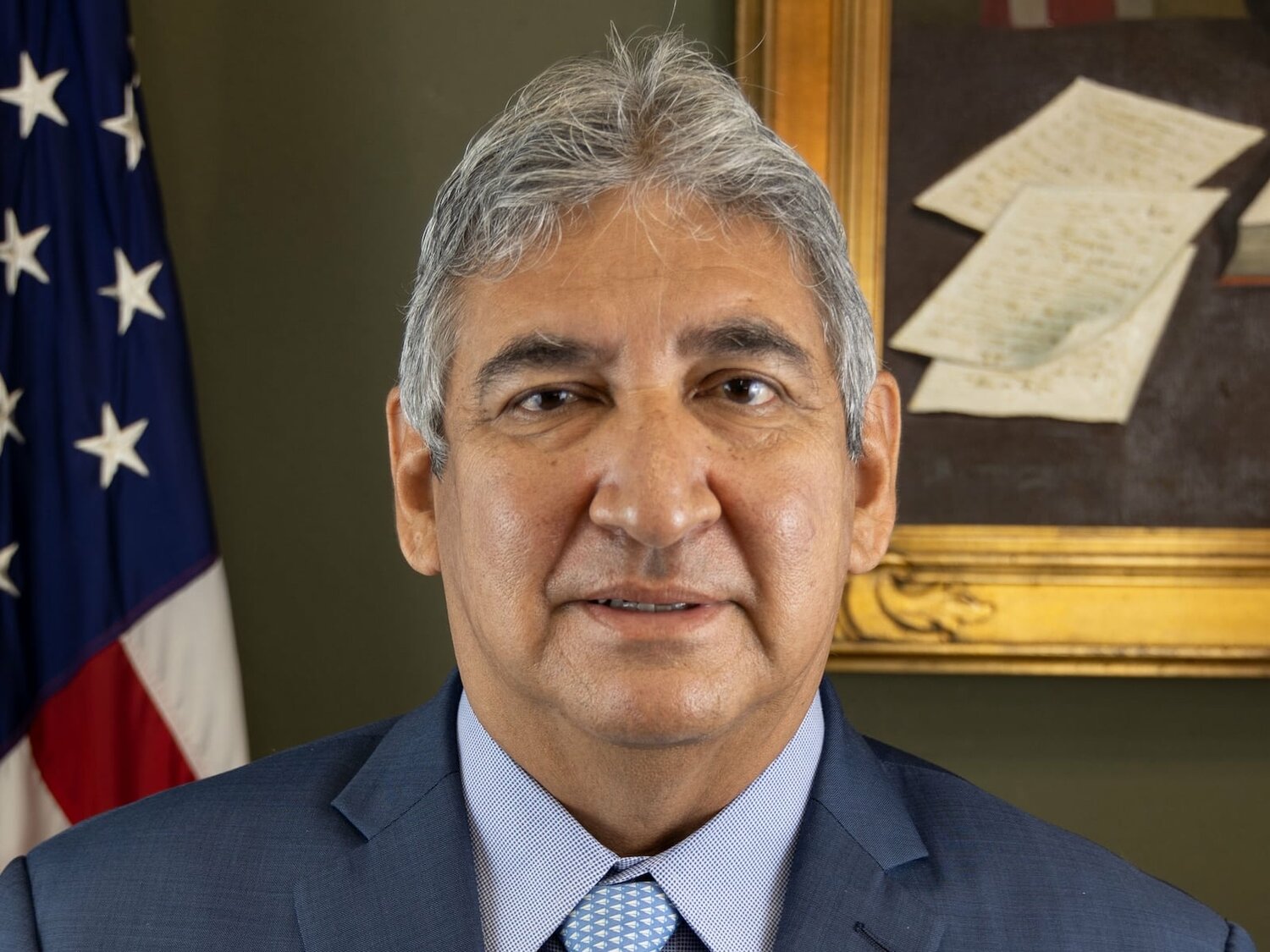
This is the view of Pete Sepulveda, executive director of Cameron County Regional Mobility Authority (CCRMA). In fact, in an exclusive interview with the Rio Grande Guardian International News Service, Sepulveda called said the passage of the legislation was “monumental” for the Cameron County project.
The legislation pushed by Cruz and Cuellar was crafted to resolve delays in providing presidential permits for four international Texas bridge projects, one in Eagle Pass, two in Laredo and one in Cameron County. The legislation was wrapped into the $886 billion National Defense Authorization Act for fiscal year 2024, which President Biden signed into law late last year.
The proposed Flor de Mayo International Bridge project in west Brownsville will be a passenger vehicle only (POE) and pedestrian bridge located eight river miles upstream from the existing privately owned Brownsville and Matamoros International Bridge and 35.6 river miles downstream from the Free Trade Bridge at Los Indios, which is co-owned by Cameron County, the City of Harlingen and the City of San Benito.
Sepulveda told the Guardian that a proposed border station for the new international bridge will be located within 173 acres of land presently owned by Cameron County.
“Cameron County plans to coordinate the construction of the international bridge and facilities through the Cameron County Regional Mobility Authority,” Sepulveda said.
“The proposed bridge has been on Brownsville’s Master Plan for over 50 years and is included in the 2021 Texas-Mexico Border Transportation Master Plan as a high impact project as well, as on Matamoros’s Master Plan.”
Indeed, the Flor de Mayo International Bridge project ranks No. 2 in priority for Cameron County’s port of entry projects in the Texas-Mexico Border Transportation Master Plan. No. 1 is a project to build two causeway-style bridge spans to connect the Port of Brownsville directly with Mexico. For the Flor de Mayo project, the Texas-Mexico Border Transportation Master Plan states: “Build a new bridge to link the United States and Mexico at FM 3248 (Alton Gloor) and Avenida Flor de Mexico.”
Sepulveda said the Flor de Mayo International Bridge project will generate “great benefits” to the region.
“Cameron County and CCRMA have been diligently working on this project for more than ten years. In September of 2021 Cameron County in conjunction with CCRMA submitted a Presidential Permit application. Now with the federal legislation signed into law this past December by President Biden, it will expedite the process of obtaining a Presidential Permit prior to the environmental and NEPA process being completed,” Sepulveda said.
“This policy change will also expedite the construction process and we anticipate the project can be completed five years sooner than what was originally anticipated. This is monumental for the Flor de Mayo International Bridge project and is another example of how the County and the CCRMA work together with our legislators to ensure that the infrastructure needs of our region come to fruition.”
Sen. Cruz and Rep. Cuellar held a press conference about their legislation in Laredo on Jan. 4. They noted that four proposed international bridges would benefit: one in Eagle Pass, two in Laredo and one in Cameron County, ie, Flor de Mayo. They also noted that their legislation secured the support of the Texas Association of Business, the U.S. Hispanic Chamber of Commerce, the Laredo Motor Carriers Association, the Border Trade Alliance, the American Trucking Association, the Texas Trucking Association, and the Texas International Produce Association.
Sen. Cruz’s office sent the Guardian a detailed timeline of the efforts he and Rep. Cuellar made to speed up the presidential permits for the four international bridge projects. It stated:
“In June 2023, Sen. Cruz led the entire south Texas congressional delegation, both Democrats and Republicans, in sending a letter to Secretary of State Antony Blinken urging the Biden administration to resolve delays in providing permits for four international Texas bridge projects. Joining Sen. Cruz in sending the letter were Sen. Cornyn, and U.S. Reps. Henry Cuellar (D-Texas), Vicente Gonzalez (D-Texas), Monica De La Cruz (R-Texas), and Tony Gonzales (R-Texas). Read the full text of the letter here.
“In July 2023, the U.S. Senate Foreign Relations Committee adopted Sen. Cruz’s amendment to streamline the presidential permitting process for building these key bridges across the Rio Grande. The amendment, which was included in a bill authorizing funding for the State Department, was ultimately passed by the entire Senate as part of the annual defense policy bill, or National Defense Authorization Act, on July 27, 2023. Sen. Cruz vowed to keep working to see that his amendment is part of the final defense bill that is signed into law.
“In October, Sen. Cruz again led a letter, this time to President Biden, expressing frustration, “over the delayed issuance of presidential permits for key bridge projects between the United States and Mexico,” and urging the president to, “swiftly approve these four critical Texas-Mexico bridge projects that will create jobs, improve supply chain resiliency, and promote economic growth.” Joining Sen. Cruz in sending this letter were Sen. John Cornyn (R-Texas), and U.S. Representatives Vicente Gonzalez (D-Texas), Henry Cuellar (D-Texas), and Monica De La Cruz (R-Texas).
“In December 2023, the annual defense authorization bill was passed with a provision, pushed by a bipartisan and bicameral coalition of Texas legislators, to streamline the presidential permitting process for new and expanded bridges across the Rio Grande in Brownsville, Laredo, and Eagle Pass, Texas. This language, which Cruz had inserted into the Senate’s National Defense Authorization Act (NDAA) and battled to keep in the final bill, was an important victory that will help alleviate border crossing bottlenecks, expand trade, and create jobs.”


