


MCALLEN, Texas — Following its major public rollout back in March, the Council for South Texas Economic Progress (COSTEP) is continuing its push to educate regional leaders on its new Industrial Data System.
The digital platform, which maps the extensive manufacturing ecosystem spanning the Rio South Texas region and Northern Tamaulipas, was the focus of a recent workshop held at the Lower Rio Grande Valley Development Council (LRGVDC) offices.
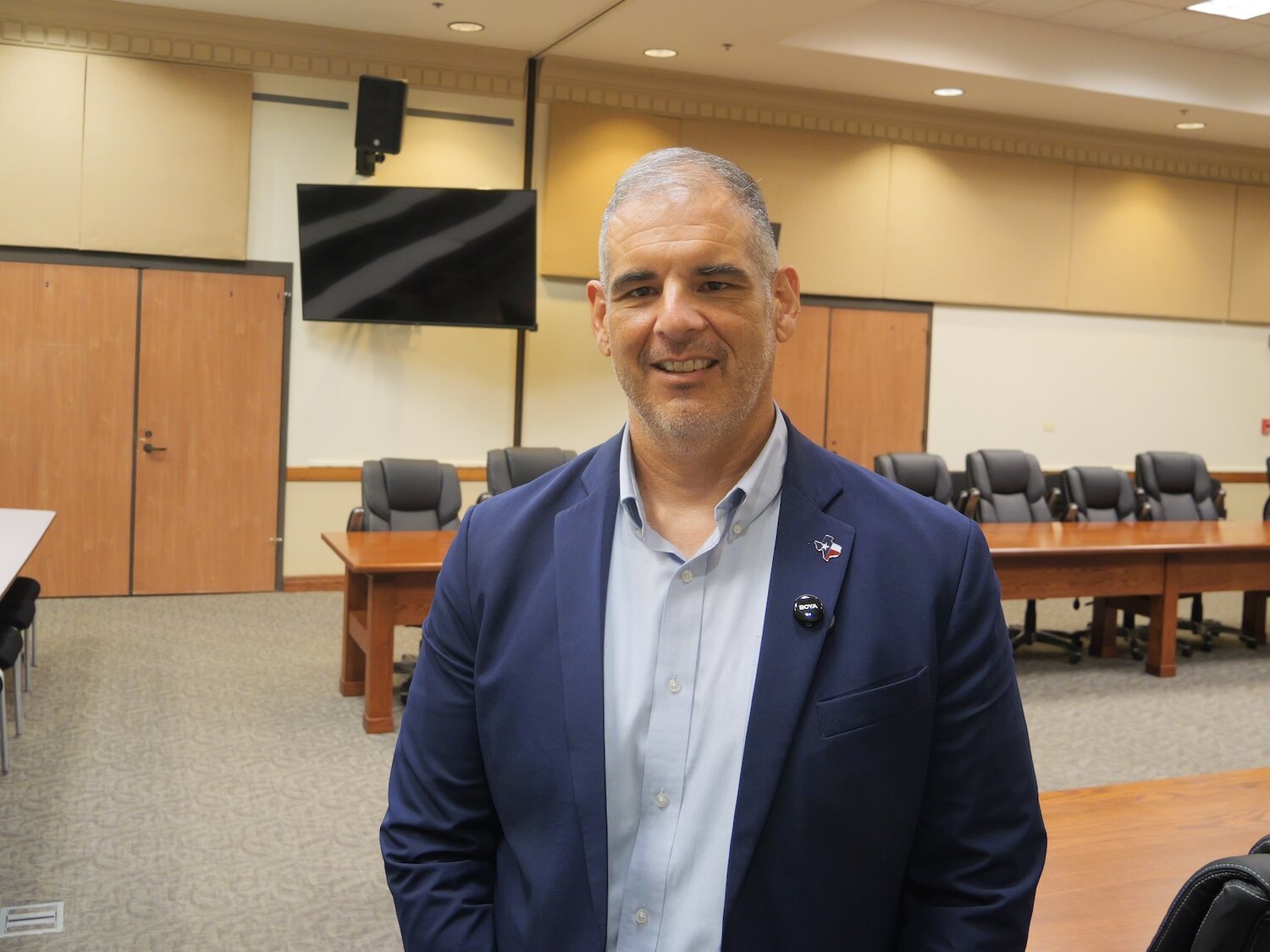
Rick Carrera, COSTEP’s director of economic development, led the briefing to ensure that local economic development corporations (EDCs), community partners and stakeholders who missed the initial launch at South Texas College can fully leverage the tool.
"We continuously try to educate everybody on that system because it is a moving document," Carrera said. "We have a good census of all the manufacturing companies in the area, but we're always looking for people to provide us perhaps with names of those that we couldn't include or didn't include for whatever reason."
The database is completely public, requiring no passwords or access codes, and can be accessed directly via the COSTEP website or through riosouthtexasregion.com—the marketing catchphrase used to promote the seven-county border region.
Carrera emphasized that the data is structured specifically to satisfy the rigorous demands of international site selectors and major corporations looking to expand or relocate operations. However, regional leaders noted that the data's true value may lie in leveling the playing field for the area's smaller communities.
During the workshop, LRGVDC's director of Community & Economic Development, Melissa Gonzalez pointed out that the centralized system will be an invaluable asset for smaller EDCs that lack the massive budgets, specialized software, or deep corporate contacts required to compile this kind of industrial intelligence.
Carrera agreed, noting that empowering smaller economic development organizations (EDOs) was a primary goal from day one.
"We pride ourselves in the fact that our smaller EDOs, and even some of our counties that don't have necessarily the resources needed for a big data system like that, have that at their access and they can use it whenever they need to," Carrera said.
To prove how agile the mobile-friendly platform is, Carrera recounted a recent request from an area EDC looking for specific medical device manufacturers in the region. Using only his cell phone, Carrera was able to filter the interactive map, isolate the medical data, and email the direct link to the EDC within a couple of minutes.
The platform’s highly detailed tracking has also sparked technical conversations with regional manufacturing experts. Carrera recalled a phone call from David Ortiz with the Texas Manufacturing Assistance Center (TMAC) right after the system launched. Ortiz noted that when he filtered the system for direct automotive manufacturing, the results read zero.
Carrera explained that the system differentiates between final product assemblers and supply chain support.
"If you filter down the companies that are direct automotive, it’ll show zero," Carrera explained. "But if you look at the companies that are servicing that sector, then the number explodes to 117. It comes down to how the system delineates those that are providing direct automotive and those that actually are part of the automotive sector."
Because COSTEP's footprint covers both sides of the Rio Grande, the database includes a robust look at the heavy manufacturing prowess inside Reynosa and Matamoros, Carrera said. He noted that leveraging cross-border industrial assets is critical when pitching global companies, especially to help younger generations of economic developers fully realize the region’s binational strength.
Looking ahead, Carrera plans to take this data on the road to SEMICON West, a major semiconductor industry conference in California, to confidently pitch the region’s electromechanical, machining, welding, and fabrication capabilities to global investors.
Feedback from outside the region is already rolling in, Carrera said, pointing out that the professional site selection community has praised the platform's structure because it gives them an immediate blueprint of who is operating in the border ecosystem and what they are capable of producing.
COSTEP plans to host additional educational workshops and data-driven events for the public and regional EDOs later this summer.
Here is a video recording the RGG Business Journal conducted with Carrera:


