


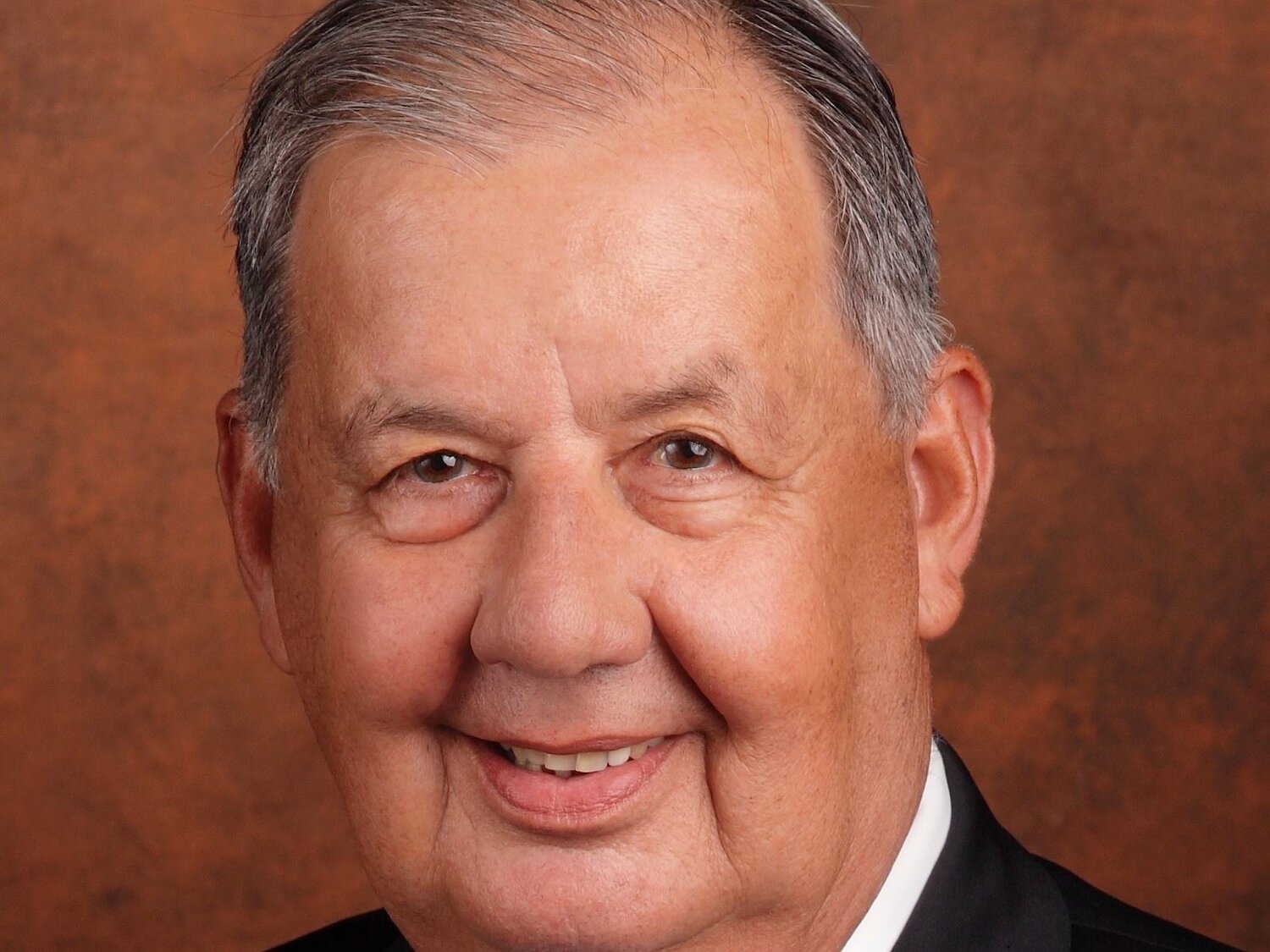
EDINBURG, Texas - Hidalgo County Judge Richard Cortez today begins a charm offensive as he seeks to bring the larger cities and economic development organizations in the Rio Grande Valley under the RioPlex umbrella.
Cortez plans to meet with all the EDCs, both individually and collectively. The first meeting takes place today with an unnamed city.
Asked what the feedback has been so far, Cortez said: “The response that we're getting from people we've contacted is very positive. The response that we've gotten from individual cities is they're still unsure.”
Smaller cities are coming on board, however. The cities of Mercedes, Alton, Alamo and Elsa have all joined or said they will join RioPlex.
Cortez’s argument is that if individual cities or EDCs go after new business on their own, they are not telling the full story. The full story is all the assets in the region, he said. And RioPlex comprises the Valley and northern Tamaulipas.
Cortez likens it to a customer visiting a mall. RioPlex is the mall and each city is a store within the mall. The city is not the mall.
In an in-depth interview with the RGG Business Journal, Cortez explained how RioPlex came about and what its goals are. He said to tell the full story he had to start with the Hidalgo County Prosperity Task Force.
“I started the Prosperity Task Force for Hidalgo County several years ago to address the issues of poverty in Hidalgo County. The four counties of the Rio Grande Valley, Starr, Hidalgo, Cameron and Willacy, have had a poverty rate in excess of 20 percent for the last five decades. That's 50 years. So, I wanted to address poverty in Hidalgo County, and we started that task force.
“In that task force, we divided it into little sections, little groups, because the reason that we haven't solved poverty is because it's a very difficult thing to address and to solve. So, I said, let's break it down into pieces, because there's different components of the barriers to moving people out of poverty, and one of those groups was what we call the CEO group.
“And the CEO group is made up of businesspeople. And they came up with the idea of forming RioPlex.”
The reason the business leaders formed RioPlex, Cortez said, is because the region needs to market itself better around the world.
“Many of them who are trying to recruit companies here and bring investment here go to different parts of the world. And they (the people they visited) told us that they didn't know where we were. They knew where Houston was, they knew where LA was, where DC was, but certainly not the Rio Grande Valley. So, we said, what is the best way for us to market ourselves worldwide? We don't have to market ourselves locally. We all know who we are locally. But how do we market ourselves globally?”
The first thing to do, Cortez said, was define who “we” were.
“Well, we're actually a binational region, where we are part United States and part Mexico. We're heavily dependent on one another. Our economies are tied together in many aspects. So, if we're going to define who we are, let’s define ourselves as RioPlex, which includes the four counties on the northern side of the river, the southern part of Texas, and the northern side of Mexico, which is basically Tamaulipas.”
And so, RioPlex was born.
“In RioPlex you find 13 international bridges, seven airports, three seaports, a medical school, multiple hospitals, multiple universities, multiple things. We think it's better to promote ourselves as a region if we're going to compete with other regions. Our competition in Texas is the Houston metro area, the Dallas-Fort Worth metro area, San Antonio, Austin, El Paso. These areas don't market themselves as a city. They market themselves as a region.”
Cortez said what individual cities have done in the past is no longer the answer.
“What we've done in the past in the Rio Grande Valley is… we only have like seven or eight EDCs, and they have been answering requests for information from Austin. And they have been responding to things on a city-by-city basis. Well, that hasn't been really successful because, well, how do you compete with those larger metro areas? Because the companies are not only looking for piece of real estate and a piece of property, they are also looking for quality of life. They're looking for other things.”
Cortez continued:
“So, we believe that if you only offer what McAllen has to offer, what Harlingen has to offer, what Edinburg has to offer… with what Harlingen has to offer, you're not going to be competitive in attracting the size and type of companies that we want to attract here. But if we start looking at RioPlex as a mall, and we're going to sell the mall, and we're going to tell everybody here in this region, you have all these stores in the mall, you have Edinburg, you have McAllen, you have Harlingen, you have the port, you have SpaceX, you have all of these great things in this region, why don't you come and take a look at us? And we believe that that is a better way of promoting ourselves, marketing ourselves and branding ourselves, than doing it on a city-to-city basis."
“I will be meeting with every EDC here, separately and together, to try to convince them that this is the best approach for economic development. And, obviously, every city, is concerned with confidentiality. Edinburgh doesn't want McAllen to know what it is going to offer (for example). Okay. So, what we're going to move to is to say, look, we have seven cities that qualify with property for this request. Put your proposal in a sealed envelope, send it to us. We won't even open it. We'll leave it sealed, and we will respond to the RFI (request for information) as RioPlex with seven different proposals inside RioPlex.
“But, when Austin receives it, when the governor's office receives it, or a company receives it, they're looking at RioPlex that has seven locations for them, or 20, or whatever number it is. That's what we're trying to accomplish.”
Editor's Note: Here is an audio recording of the RGG Business Journal's interview with Judge Cortez:


